Skip to content

Chapel Hill, North Carolina

Brady
Rickenbaugh

I build AI tutoring and test prep for eighth graders, starting from a pattern I found in five years of entrance-exam data.

UNC Chapel Hill · Political Science and Psychology · Honors Carolina · Class of 2029

From Cincinnati. A Tar Heel since 2025.

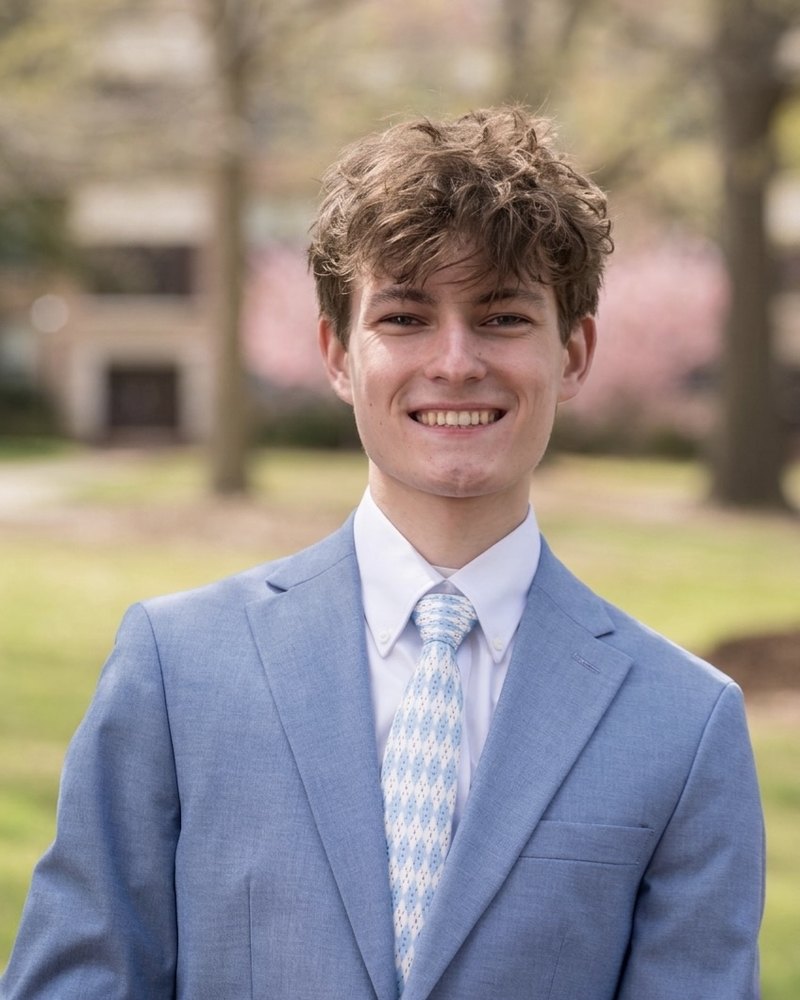
Brady Rickenbaugh, photographed outdoors on a college campus in spring.

The question

For two years in high school I tutored for free. Most of my students were eighth graders who would not otherwise have had a tutor, and most of them were about to sit the HSPT, the entrance exam Catholic high schools in Cincinnati use for admission and for scholarship decisions. I liked the work. I also started wondering how much the test actually decided.

So I went and looked. I pulled five years of HSPT scores and set them beside five years of acceptance and scholarship results from the Catholic high schools around us. There was a real correlation. Scores and outcomes moved together, closely enough that I stopped thinking of the test as a formality and started thinking of it as something a family could actually prepare for.

That is where the course came from. Two other Assisi Scholars and I built a six-week HSPT program for eighth graders and ran it through Roger Bacon and St. Clement School. The course became NextStep Tutoring. NextStep needed practice software, so I built HSPTAce.com. And because a course meets once a week while a thirteen-year-old is alone with the material the other six days, I built an AI study buddy to sit in that gap. The rest of this page is that chain, in order.

The analysis

This is the figure I keep coming back to. I have redrawn it here rather than reproduced it: the axes are real, the points are illustrative, and the schools’ data stays with the schools. Step through it.

Figure 1 · HSPT scores against scholarship offers · five years · illustrative

A line chart. The horizontal axis is HSPT composite score as a percentile, from about the 40th to the 95th. The vertical axis is how common a merit scholarship offer is, from fewer to more, with no numbers. Ten illustrative points rise from lower left to upper right, gently at the low end and more steeply through the middle. Five thin lines with the same shape sit behind the points, one for each year.

Notes

Five years of HSPT scores, matched to five years of acceptance and scholarship outcomes from Catholic high schools around Cincinnati. Each thin line here stands in for one of those years.

1 of 4
Illustrative. This is the shape of what I found, not the data. The thin lines stand for the five years; the points are a made-up cohort placed to show the pattern, not measured values.
Read the chart as text

A line chart. The horizontal axis is HSPT composite score as a percentile, from about the 40th to the 95th. The vertical axis is how common a merit scholarship offer is, from fewer to more, with no numbers. Ten illustrative points rise from lower left to upper right, gently at the low end and more steeply through the middle. Five thin lines with the same shape sit behind the points, one for each year.

The illustrative points, band by band. Words stand in for numbers on purpose.
HSPT composite bandScholarship offers
40th percentilefew
50th percentilefew
60th percentilesome
65th percentilesome
70th percentilemore
75th percentilemore
80th percentilemost
85th percentilemost
90th percentilemost
95th percentilenearly all
  1. Five years of it. Five years of HSPT scores, matched to five years of acceptance and scholarship outcomes from Catholic high schools around Cincinnati. Each thin line here stands in for one of those years.
  2. They moved together. Higher composite scores went with more acceptances and more scholarship offers. That is the correlation. It was real, and it is the reason the rest of this page exists.
  3. The slope is the argument. Move a student to the right on this axis and they tend to move up on that one. Preparation moves students to the right. That was the whole case for building a course.
  4. So I built one. Six weeks, every section of the test, the strategy that fits each one, and full timed practice exams, all before the November test date. That is the pilot, in the next section.

The pilot

HSPT Preparatory Pilot Program

Founder and instructor · October 2023 to May 2025
Roger Bacon High School and St. Clement School, Cincinnati

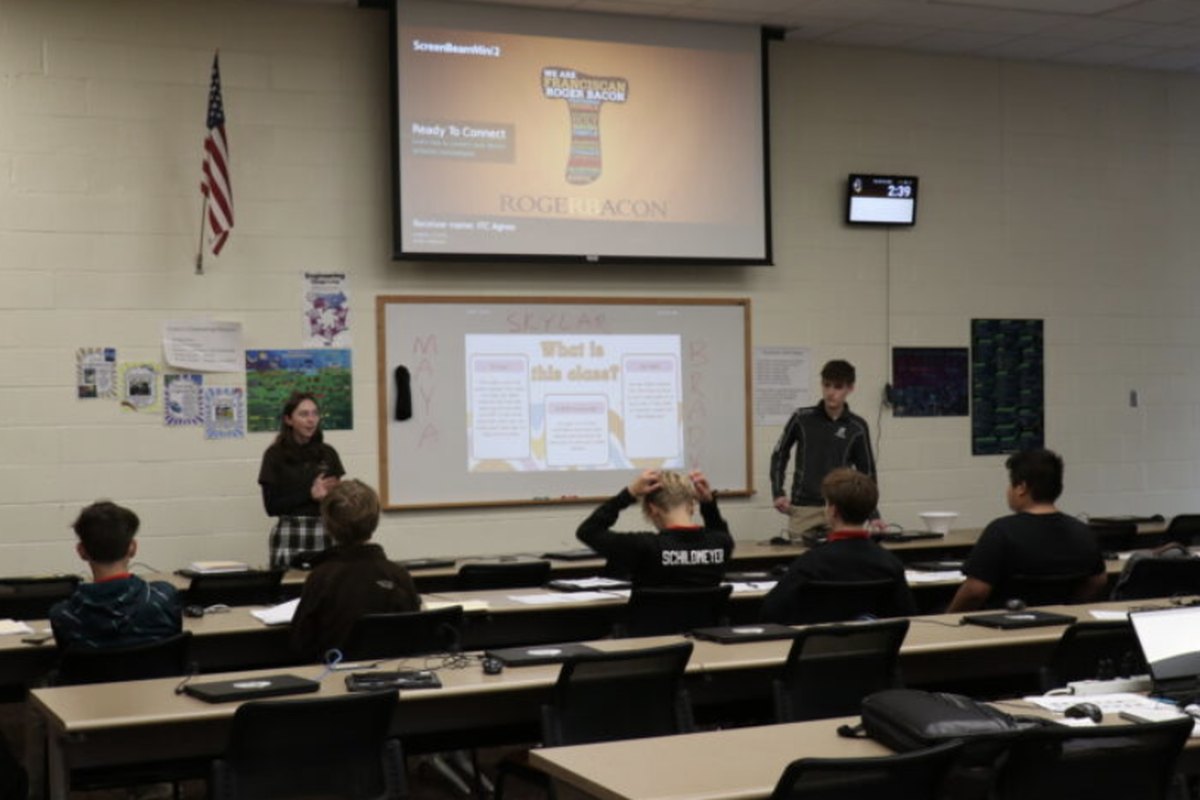
The course ran six weeks, once a week, in the run-up to the November test date. I designed it with two fellow Assisi Scholars and taught the sessions. We covered every section of the HSPT, the strategy that fits each one, and full timed practice exams, because the clock is as much a part of the test as the questions.

Roger Bacon’s administration recognized the program as a model for other schools to replicate, and the school featured it in its news in October 2024 as an example of student-led community impact.

I want to be careful about what I claim past that. I did not measure score changes, and nobody has replicated the course yet, so I will not pretend either happened. It ran, and it led to everything below.

A classroom at Roger Bacon: two student instructors presenting at the front of the room while eighth graders work at their desks.
The pilot, in session.

What came after

Three things grew out of the pilot. The newest is first, and it gets the most room because it is the one I think about most.

AI Study Buddy

A conversational AI tutor for eighth graders

A course meets once a week. The other six days a thirteen-year-old is alone with a workbook, and that gap is where most of the studying quietly does not happen. So I built a conversational AI tutor for eighth graders that sits inside the gap. It works through HSPT material with a student in plain language, between sessions, at whatever hour the studying actually happens.

The part I care about most is the part the adults can see. I built it so a parent or a teacher can look at how a student is actually using the AI: what they asked, and what they were told. That oversight is not a setting I added at the end. The whole thing is shaped around it.

I think this is what putting AI into middle-school learning should look like. The student gets patient help. The adults in their life get a window into it, by design. I built it as a working model of that.

HSPTAce.com

Gamified HSPT practice on the web

HSPTAce.com is the practice side. It is a gamified HSPT prep web app, built with Vite, React and Supabase and deployed on Netlify. Students, parents and tutors each get their own kind of account, with row-level security so each of them sees exactly what they should and nothing else.

hsptace.com

NextStep Tutoring

Grades 6 through 12

NextStep Tutoring is the business that grew out of the pilot: grades 6 through 12, HSPT, SAT and ACT, and help in school subjects, in person in Cincinnati over the summer and online during the school year. It has its own page.

NextStep Tutoring

At Carolina

I came to Chapel Hill in 2025 for political science and psychology, in Honors Carolina. They turned out to be two halves of the question I started with in Cincinnati: how people learn, and who gets the chance to.

Most of what I do here outside class runs through student government. This year that means the Department of Academic Affairs in the Executive Branch. Last year it meant Cobb Community Government, where I held the Social Justice Advocate seat and was named Social Justice Advocate of the Year.

Service

  • Department of Academic Affairs, Executive Branch, UNC Student Government
    August 2026 to present
  • Social Justice Advocate, Cobb Community GovernmentNamed Social Justice Advocate of the Year, 2025 to 2026.
    2025 to May 2026
  • Campaign volunteer, Devin Duncan for Student Body President
    Spring 2025

Education

  • University of North Carolina at Chapel HillB.A., Political Science and Psychology. Honors Carolina.
    Expected May 2029
  • Roger Bacon High School, CincinnatiAssisi Scholar.
    Graduated May 2025

The things I would put my name to: AI in education and AI literacy, EdTech product development, curriculum design, data analysis and research, public speaking, and web app development.

Contact

If you are hiring for a summer, teaching something I should take, or running for something, write to me. Email is best, and I read all of it.

BQR1018@gmail.com513-680-9755